Modern manufacturing depends on much more than simply having powerful tools on the production floor. Industrial companies are under constant pressure to improve productivity, maintain consistent quality, reduce downtime, protect operators, and adapt quickly when products or processes change.
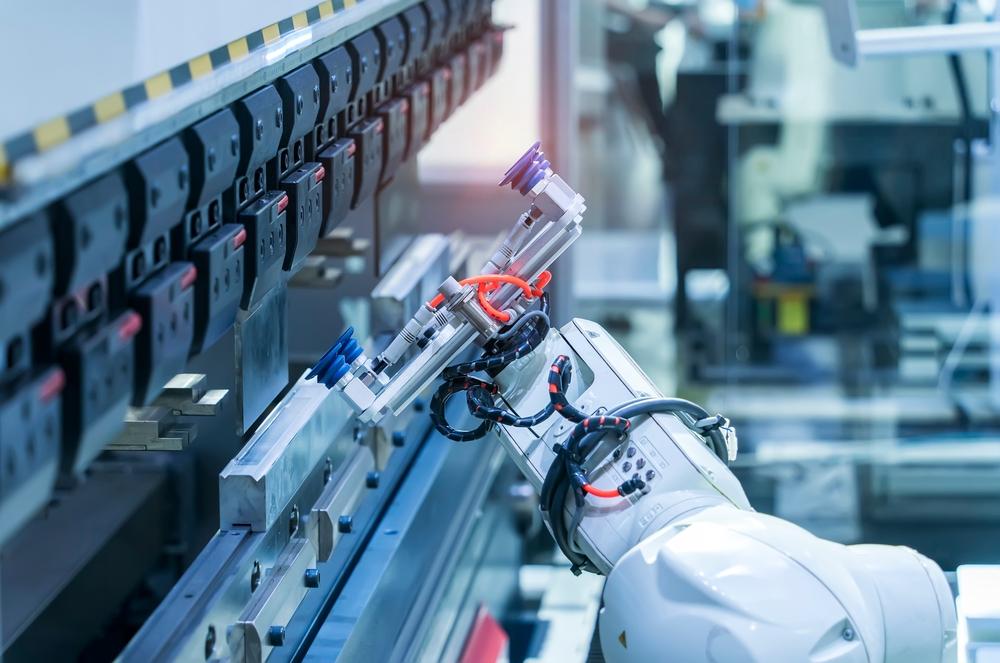
At the same time, digitalization and automation are transforming how assembly operations are planned, monitored, and improved. Smart industrial tools and integrated assembly solutions have therefore become an important part of building production environments that can meet both current demands and future challenges.
Smarter tools are changing industrial assembly
The role of an industrial assembly tool has changed significantly. While torque, speed, durability, and reliability remain fundamental, modern tools can also be part of a connected production system. Manufacturers looking at how these technologies fit together can just follow this link to explore Atlas Copco’s range of industrial tools, assembly solutions, automation systems, quality assurance products, and related technologies.
This broader approach reflects the development of modern manufacturing itself. A tightening tool, for example, is no longer necessarily an isolated piece of equipment used for a single operation. Electric and cordless assembly tools can work alongside controllers, software, error-proofing systems, and data collection solutions. Together, these technologies can provide greater control over the assembly process and make useful production information available to operators and other parts of the organization.
The result is a production environment in which the tool becomes part of the process rather than simply something used within it. That distinction matters when manufacturers are dealing with complex assemblies, varying production requirements, or applications where repeatability is particularly important.
Flexibility is another major consideration. Assembly lines may need to handle different products or configurations without extensive changes to tools and equipment. Cordless tools can provide greater freedom of movement, while modular solutions and different attachments can make it possible to handle several fastening applications more efficiently. Fixtured assembly tools, meanwhile, are suited to applications where repeatability and controlled operation are essential in automated or high-volume manufacturing.
There is no single tool technology that suits every assembly environment. The appropriate solution depends on factors such as the fastening application, required torque, accessibility, production volume, degree of automation, and quality requirements. This is why modern industrial tooling increasingly needs to be considered as part of the complete production process.
Connected assembly supports quality and process control
Quality problems in industrial manufacturing can become expensive quickly. A fastening error at one workstation may affect later production stages, lead to rework, cause unnecessary downtime, or create problems that are discovered only after a product has left the factory. Preventing mistakes during assembly is therefore generally more effective than identifying them afterward.
Modern assembly systems can support this approach through process control and error-proofing. Instead of relying entirely on the operator to remember every step, connected systems can help guide the assembly sequence and verify that the correct process is followed. Depending on the application, industrial location technologies, socket and bit selection, software, controllers, and tightening tools can work together as part of a more controlled production process.
Data also has an increasingly important role. When assembly information can be collected and analyzed, manufacturers gain greater visibility into how their processes are actually performing. This can help identify recurring issues, variations between stations, or areas where a process could be improved.
The value of this information is not limited to investigating problems after they occur. Production data can become part of continuous improvement. Rather than making decisions solely on assumptions or isolated observations, manufacturing teams can use process information to better understand what is happening across an assembly operation.
Quality assurance solutions add another layer of control. Electronic torque wrenches, transducers, data collectors, joint simulation equipment, and quality assurance software can support verification and testing. For companies working with demanding fastening applications, this helps create a clearer connection between the assembly operation and the processes used to verify its performance.
Calibration is equally important. Even sophisticated tools need to operate within the required specifications. Calibration and preventive maintenance help ensure that tools continue to perform as intended, particularly in applications where tightening accuracy is critical. A connected production strategy therefore still depends on fundamental disciplines such as tool maintenance, testing, calibration, and correct setup.
Automation works best as part of an integrated production strategy
Industrial automation is often discussed as though the objective is simply to replace manual work. In practice, successful automation is more nuanced. The goal is generally to determine which processes benefit from automation and how automated equipment, operators, software, and quality systems can work together effectively.
Automated tightening solutions, feeding systems, machine vision, dispensing technology, flow drill fastening, and self-pierce riveting are examples of technologies that can become part of modern manufacturing environments. Each addresses different production requirements, but the underlying objective is similar: creating processes that are predictable, repeatable, and efficient.
Automation can be particularly valuable for repetitive tasks, high production volumes, and applications requiring consistent execution. It can also help reduce operator exposure to demanding or ergonomically difficult work. However, automation must fit the actual production process. Introducing technology without considering workflow, product variation, accessibility, maintenance, and operator interaction can simply move inefficiencies from one part of the line to another.
This is why integration matters. An automated station should not exist as an isolated island if the wider production process depends on connected information and coordinated operations. Tools, controllers, software, quality systems, and production data become more valuable when they work together.
Human operators remain central to many assembly environments as well. Workstation solutions such as torque arms, suspension systems, industrial location technology, and projection guidance can support operators while maintaining flexibility. A well-designed workstation can make the correct task easier to perform while reducing unnecessary movement and improving consistency.
Ergonomics should therefore be treated as a production consideration rather than an afterthought. Tool weight, balance, reaction forces, accessibility, and workstation design can all affect how comfortably and consistently a task is performed over an entire shift. Improving the operator’s working conditions can support both safety and production performance.
The most effective automation strategy is consequently not always the one with the highest possible level of automation. It is the one that creates the right balance between automated processes, smart tools, operators, and supporting systems for the specific manufacturing environment.
Smart integrated assembly creates a foundation for future manufacturing
Industry 4.0 has brought connectivity, data, analytics, and automation into the center of manufacturing strategy. For assembly operations, this development is closely tied to the concept of Smart Integrated Assembly, where connected tools, integrated production solutions, and data-driven services operate as parts of a wider system.
A connected factory creates opportunities to move beyond individual improvements. A faster tool may reduce the cycle time of one operation, but an integrated approach can examine how that operation relates to quality, sequencing, operator guidance, maintenance, and production data. Improvements can therefore be considered across the complete assembly process rather than at a single workstation.
This becomes increasingly important as manufacturing grows more complex. Product variation, electrification, new materials, demanding quality requirements, and pressure for more efficient use of resources all influence how production systems need to perform. A rigid line designed around a limited number of fixed processes can be difficult to adapt when those conditions change.
Flexible assembly technology provides another option. Cordless and electric tools, configurable software, modular equipment, and connected systems can make production environments easier to adapt as requirements evolve. Manufacturers can then focus on developing an assembly architecture that supports change rather than repeatedly rebuilding processes around individual tools.
Sustainability is also becoming more closely connected with production efficiency. Reducing waste, improving energy efficiency, minimizing unnecessary rework, and making better use of equipment can support both environmental and operational objectives. In this context, smart manufacturing is not simply about collecting more data or installing more technology. Its value depends on whether those technologies contribute to measurable improvements in the way products are assembled.
Service and support remain important throughout the equipment lifecycle. Installation is only the beginning. Preventive maintenance, repair, spare parts, calibration, training, and technical support all contribute to maintaining production performance over time. Equipment that performs well when first commissioned must continue to do so after thousands of production cycles.
Modern industrial assembly is therefore becoming increasingly interconnected. Tools, automation, software, quality assurance, workstation design, service, and production data are no longer separate considerations. They influence one another and need to be evaluated as parts of the same manufacturing system.
Companies that take this wider perspective can build production environments that are not only productive today but also better prepared for changing requirements. Smart industrial tools provide the practical foundation, while integrated assembly solutions connect those tools to the processes, people, and information required to run modern manufacturing efficiently.